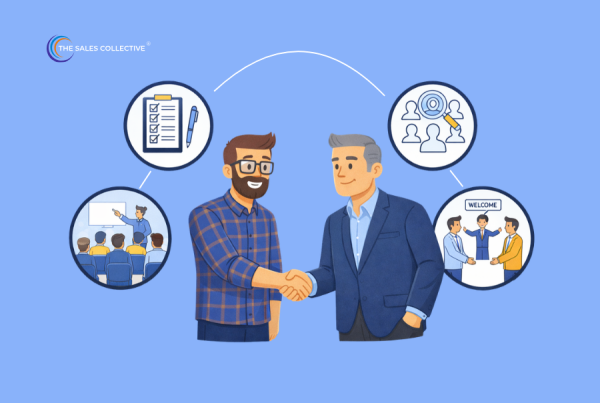


One of the most common mantras in sales training and onboarding is, “Just watch me.” A seasoned rep or manager will invite new hires to observe how they prospect, present, or close deals—hoping that, by simply watching, newcomers will absorb the secrets to success. But this tradition, while deeply embedded in many organizations, is increasingly at odds with what we know about how adults actually learn. According to adult learning theory, lecture-based or observation-based training often yields a 5–15% retention rate at best. That’s a dismal figure when you think about the time and money invested in building a strong sales team.
This article explores why “Watch Me” is not a sustainable strategy for sales or onboarding. We’ll look at the science behind adult learning, the pitfalls of observation-based training, and how to transform your approach so new hires actually retain skills—and can execute them under real-world conditions. Finally, we’ll highlight the critical roles of role-playing and coaching in bridging the gap between knowledge and application.
1. The Pitfalls of a “Watch Me” Culture
Before diving into the nuts and bolts of better training methods, let’s consider the core reasons why “Watch Me” fails as a primary onboarding strategy.
a. Passive Learning Doesn’t Stick
In a “Watch Me” environment, new hires passively observe a mentor or manager performing various sales tasks—cold calls, demos, negotiations—without active engagement. While they might pick up a few tricks by osmosis, the deeper mechanics of why and how things are done remain abstract. The result? New hires end the day with a vague sense of the overall process but lack any real muscle memory or confidence in their ability to replicate it.
b. Observation Alone Fails Under Pressure
Even if the new hire does pick up valuable insights during observation, stress and nerves can render those lessons useless when they attempt them for the first time on a real prospect. Think about it: how many times have you watched a professional athlete perform a skill and thought, “I could do that,” only to discover that, in practice, it’s infinitely harder than it looks? The same applies to sales. No matter how well something is demonstrated, until a person does it themselves, they won’t fully grasp the nuances—or be prepared to adapt on the fly.
c. Limited Feedback Loops
In an observation-based setting, the feedback loop revolves around watching someone else get feedback (usually from the customer) instead of experiencing it firsthand. Feedback is a powerful tool for growth—if the person receiving it can directly connect it to their own actions. But if a new hire only watches the manager handle objections, they don’t gain personal insight into how they might deliver that same message in their own style or how they might adapt under pressure.
d. Overconfidence without Competence
Watching can breed a form of “illusory mastery.” A new rep might see a seasoned seller close multiple deals and feel overly confident that they, too, can do it. But confidence built from someone else’s success is hollow: it doesn’t come with the practical skills or the resilience to handle rejection when it inevitably arrives.
2. The Science of Adult Learning
Adult learning theory challenges many traditional notions about how people pick up new skills. We often assume that if we simply provide enough information—through lectures, watching, or reading—learning will happen. But in adults, learning is far more experiential and self-driven.
a. Active vs. Passive Learning
Active learning involves any task that requires doing, thinking, creating, or problem-solving. By contrast, passive learning—like watching a demo or listening to a lecture—rarely results in deep processing of new information. Studies across educational contexts consistently show that active methods (such as simulations, group discussions, and hands-on projects) far outperform passive methods in retention, engagement, and the ability to apply skills later.
b. 5–15% Retention from Lecture/Observation
The often-cited statistic that lecture-based learning yields only around 5–15% retention (over a matter of weeks) underscores the limitations of “Watch Me.” So, if a new salesperson is relying mainly on observation, they’re likely to retain just a fraction of what they see—even less under the stress of real sales interactions.
c. Adult Motivation and Relevance
Adults typically learn best when the material is relevant and immediately applicable to their work. Simply watching someone else might not drive home how crucial certain skills are, because the observer lacks the context of trying—and sometimes failing—on their own. Once they’ve struggled or faced confusion, though, any instruction that clarifies or overcomes that challenge becomes doubly relevant, thus more memorable.
Braedi DeLong, COO of The Sales Collective, dives into this misunderstood relationship between knowledge and application and how the real key to embedding knowledge, lies in practice.
3. Why Adults Need to “Learn By Doing”
Given these insights, a far more effective strategy than “Watch Me” is “Try It Yourself,” or a “learning by doing” model. This approach directly addresses the limitations of passive observation.
a. Building Real Muscle Memory
When a salesperson practices a new objection-handling script or attempts a discovery call, they begin to form neural pathways that translate into muscle memory—helpful for phone calls, face-to-face meetings, or even email interactions. Over time, the skill is automated, freeing mental bandwidth to adapt to the conversation rather than recalling memorized lines.
b. Confidence Grows Through Safe Failures
In an environment where new reps get to try, stumble, and try again—especially in role-play scenarios—they learn without the high stakes of losing a real deal. This fosters resilience and problem-solving skills. When they do eventually face real prospects, they’ve already navigated a wide range of potential obstacles in a controlled, lower-pressure context.
c. Personalized Learning Paths
Everyone learns differently. Some might quickly master rapport-building but struggle with pricing discussions. Others may be great closers but weak qualifiers. “Learn by doing” identifies individual weaknesses more effectively, so managers can tailor coaching to each rep’s unique challenges. Observation alone rarely brings these nuances to light.
4. Role-Playing: The Missing Ingredient in Most Sales Onboarding
Role-playing often gets a bad rap—some reps see it as awkward or “artificial.” But properly designed role-plays mimic real-life scenarios in a safer environment, allowing reps to practice, receive feedback, and course-correct before engaging with real customers.
a. Realistic Scenarios
A good role-play simulates the customer’s persona, needs, and objections. It’s not just “Let’s pretend I’m a customer.” Instead, the manager or peer playing the customer has a script or at least a clear persona to guide realistic pushbacks. This fosters the critical thinking and improvisational skills a rep needs in genuine sales calls.
b. Iterative Improvement
After each role-play, immediate feedback is crucial. What went well? Where did the rep lose the customer’s interest or fail to address a concern? Let them re-run the scenario, applying the feedback right away. This feedback loop cements new behaviors more effectively than any lecture could.
c. Building Confidence in Low-Stakes Settings
Role-playing might feel uncomfortable, but it’s far less intimidating than the fear of losing an important deal. By practicing in a low-stakes environment, new hires gain confidence without jeopardizing pipeline targets. That confidence often translates directly into more assertive, polished real-world interactions.
5. Coaching and Real Observations from the Field
While role-playing is foundational, it’s equally important that managers and seasoned reps conduct structured coaching sessions based on real-life observations. This goes beyond “Watch Me” and instead becomes “I’m Watching You—Then We’ll Debrief.”
a. Call Listening and Debriefing
In many sales environments, managers or team leads can listen in on live calls (with permission) or review call recordings. Post-call, they can provide specific feedback: “At the five-minute mark, you handled the budget question well, but missed an opportunity to expand the pain point.” By linking feedback to actual moments in the conversation, managers help reps make targeted improvements.
b. Field Ride-Alongs
If your sales team does face-to-face meetings, consider ride-alongs in which a manager or mentor attends the meeting and observes quietly. After the meeting, the coach and rep can dissect what happened—how well the rep read the room, addressed objections, or handled the relationship dynamic among decision-makers. This real-time feedback is more powerful than any hypothetical scenario.
c. Setting Coaching Goals
Feedback is most effective when paired with clear goals. Perhaps a rep needs to improve their discovery questions by the next quarter. Or maybe they need to focus on building stronger rapport within the first two minutes of a call. When managers define these goals, track progress, and celebrate milestones, reps remain motivated to integrate new practices.
If you’re looking to understand more around your sale manager’s ability and tendency to coach effectively, check out our Sales Manager DNA Assessment, which benchmarks sales managers against the top 1% by measuring them across the core competencies statistically proven to determine their success or failure in seat; this includes their coaching effectiveness, accountability enforcement, and motivation techniques.
Download a Free Sample Sales Manager DNA Assessment

6. Overcoming Resistance to Active Learning
Despite the evidence supporting a more hands-on approach, you might encounter resistance from both new hires and experienced reps:
- Awkwardness: Role-plays and simulations can feel contrived, especially at first. Emphasize that the discomfort is a small price to pay for mastering high-value skills.
- Time Constraints: Sales teams are often under pressure to meet targets quickly, so taking time to practice can appear counterintuitive. However, front-loading practice can drastically reduce the time wasted on unproductive calls and leads later.
- Manager Inertia: Some managers prefer to show “how it’s done” rather than orchestrate role-plays or structured coaching. Encouraging them to embrace the coaching model—perhaps by providing them with feedback frameworks and success stories—can help shift the mindset.
7. Integrating “Learn by Doing” into Your Onboarding Program
a. Step 1: Set Clear Learning Objectives
Before new reps begin any training, outline specific competencies they must master—such as prospecting, objection handling, product knowledge, or negotiation techniques. Align these competencies with real performance metrics (e.g., number of qualified leads generated, conversion rates, average deal size).
b. Step 2: Mix Theory with Immediate Practice
It’s unrealistic to banish lectures entirely—some concepts do need to be explained. But intermix each theory segment with practical exercises. If you spend 20 minutes explaining a discovery framework, follow it immediately with a quick role-play or small-group exercise. This ensures new information is applied right away, boosting retention.
c. Step 3: Establish Coaching Cadences
Rather than ad-hoc feedback, managers should schedule regular coaching sessions—weekly or bi-weekly one-on-ones where they review calls, provide targeted feedback, and help reps set incremental goals. These sessions keep learning active over weeks and months, preventing the short-lived gains typical of “Watch Me” approaches.
d. Step 4: Incorporate Group Learning
Group discussions, peer reviews, and mastermind sessions can amplify learning by encouraging reps to share experiences, best practices, and even their struggles. Each rep might bring a unique perspective to objection handling, for example, sparking new ideas within the team.
e. Step 5: Track Progress and Celebrate Wins
Use metrics to gauge whether the hands-on learning is boosting performance. Monitor not only final outcomes (like closed deals) but also leading indicators (like the quality of discovery notes or the frequency of successful next steps). As reps show progress, celebrate—and share success stories to reinforce the new approach.
8. The Long-Term Payoff
It’s important to recognize that shifting from a “Watch Me” culture to a “Learn by Doing” culture is not an overnight endeavor. It requires rethinking onboarding, investing in coaching, and embracing some initial discomfort. However, the ROI of this approach can be extraordinary:
- Higher Retention Rates: Sales reps who truly master skills are more likely to feel successful and stick around.
- Faster Ramp Times: By practicing rather than just observing, new hires become productive more quickly, reducing the cost of a long onboarding cycle.
- Consistent Improvement: As role-playing and coaching become engrained in the culture, even tenured reps continue to hone their craft, ensuring the team as a whole remains competitive and adaptive.
- Scalable Framework: Once you have a robust, active-learning onboarding model, you can replicate it with future hires and even apply it to other departments needing skill-based development.
9. Conclusion: Moving Beyond “Watch Me”
If you’re looking to build a world-class sales team, remember that “Watch Me” is not a viable long-term strategy. Yes, observation can offer insight, but it should be the starting point, not the entire plan. Real adult learning research has consistently shown that doing trumps watching for lasting skill acquisition and confidence.
By emphasizing active learning—including role-plays, real-time coaching, and iterative feedback—organizations can dramatically increase knowledge retention from the dismal 5–15% range to something truly transformative. This approach demands more upfront planning and commitment, but the rewards are increased sales performance, improved retention of new hires, and a stronger, more adaptive sales culture.
The time to pivot is now. Whether you’re revamping your current onboarding program or building one from scratch, let the guiding principle be “learn by doing.” Encourage experimentation, celebrate small wins, and create continuous feedback loops that empower every salesperson to grow. In a crowded marketplace, the team that actually masters its craft rather than merely observing it will always rise to the top.
Learn more about how our sales team training program bridge the gap between theory and practice through custom role-plays and interactive coaching to equip sales teams with the skills to execute in their real-world selling environment.